
About Learning
The thing about sharing information is that while natural things stay the same, human understanding doesn’t! When it comes to water there are a lot of companies marketing products which have raised more questions than provided answers – prominent researchers like Dr Emoto and Veda Austin also don’t have all the answers but undeniably challenge the status quo and create wonder. Understanding water, our main element, appears infinite and deserves our respect and humility.
I encourage you to do your own research and trust your own thinking. I also enjoy discussing such things. Some of us have a scientific approach to learning and for others it’s the gut feel. One principle that has stood the test of time is that you cannot improve on nature – to think otherwise seems arrogant.
Being at Heart Spring for over a decade has been a big learning opportunity through the sharing of ideas with my customers. I am a heart-based learner and value those with a more scientific mind to cross-reference with me!
I highly value and respect our educated and intuitive customers, including the many health practitioners and self-learners who have validated and informed my experience. At Heart Spring we encourage connection and talking – let it flow!
My Background
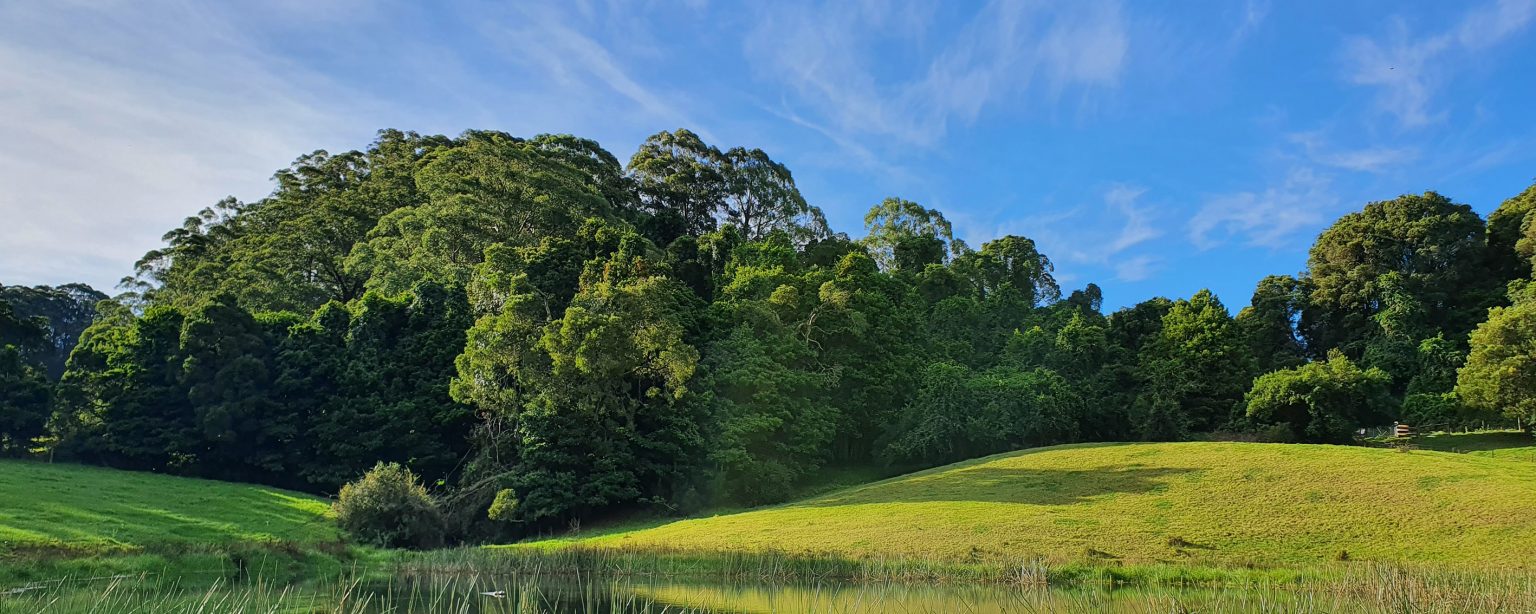
Starting by talking about learning probably comes from having studied behavioural science to which I added education. Growing up, my teacher parents were considered health nuts for going to the markets to buy fresh produce every Saturday and growing their own food. As well as living on the edge of bushland, they encouraged me to go bush and to go camping – get out in nature.
In the 1980’s I worked at Bioglan Laboratories – a hub of nutritional research where I developed a lifelong fascination with health. I was the Practitioner Relations contact, ran seminars for chemists and helped organise health practitioner seminars featuring renowned Australian research doctors of the day such as Sandra Cabot, Robert Buist and Ian Brighthope.
30 Something Years of Filters – Trial and Error
With the understanding that water is foundational to good health, in the 1980’s I bought a Brita water filter from the supermarket. Importantly, that took out a lot of the microbe gut-destroying chlorine, but what I wasn’t aware of is how well-absorbed chlorine is through the skin when you bathe or shower; nor how the steam from a shower converts it to chloroform! Be that as it may, it took becoming parents to our two spirited sons in the 1990’s for us to take further interest in our household water supply with the purchase of a shower filter and a reverse osmosis (R.O.) filter we had plumbed-in to the kitchen to take out the neuro-toxic fluoride that we were learning could also cause fluorosis or white pitting of the teeth (and bones!) that should be avoided. Hey, R.O. was developed by NASA and enabled the astronauts to drink their own urine in space (as water!) – it had to be good, right?
Some years later, now living in the Highlands we found a unique local spring water that proved way better than filtered water and so we became long-time customers for our drinking and cooking needs, whilst continuing to experiment with various combinations of filters for the bathroom.
Fast forward another 20 years to 2022 and we installed a whole-of-house filter that removes chlorine from our town water supply, including to our garden.
We’re getting serious now!
Through this decades-long process, we realised good quality water is a really big story of vested interests, big business, agency capture, marketing, and how vulnerable we all are – but that is another story. Suffice to say, no man-made filter came close to the benefits of naturally filtered true spring water, in our experience.
Called by the Ancestors and by the Water of the Spring? 1859 – 1918
As mentioned previously, my wife Debby and I moved our family down from Sydney to the Southern Highlands in 1999, having been drawn to the area time and again, starting with our honeymoon in 1989. We couldn’t explain it, but we somehow felt a connection to this area and this particular local spring water seemed to have ‘charmed’ us as well.
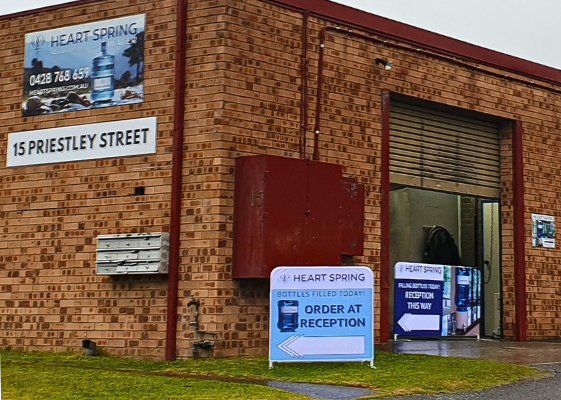
We all thrived in the Highlands, but I was completely over the corporate commute by 2015 and looking to work for myself locally when an opportunity came up to purchase a small local water delivery service. ‘Spring Plus’ had been established some years earlier by a friend and, serendipitously, his water was sourced from the same spring we’d been drinking from all these years. I took the plunge (pun intended) and built a loyal customer base with our delivery service and later expanded to the full circle operation of bottling, storing, cleaning, refilling and delivering across the Highlands and into Sydney, rebranding to ‘Heart Spring’ to put our own stamp on it. Purchasing the bottling operation gave me direct access under licence to the spring, cutting out the middleman.

Here’s where the story gets interesting. My father, a keen historian with a particular interest in his maternal ancestors who were early pioneers of the Nowra district, wrote a family history book with information about some relatives who were buried in a Burrawang cemetery.
At first, we took a casual interest and checked out the graves, but it was only recently we learned that one of these relatives was none other than my great, great, great grandmother! Our first ancestress to Australia, Catherine Kerwick arrived in the Shoalhaven district from Tipperary in Ireland some 6 years after her husband, Michael Kerwick, was ‘transported for life’ to the colony for political activism in 1829. When she was widowed in 1863, she joined her son Patrick and his family who had moved to a dairy farm in Burrawang. Earlier, in 1861 he and another relative had reportedly dragged a plough up the escarpment bridle tracks from Nowra to the nearby hamlet of Avoca.
It was fascinating to learn the fate of some of our hardworking Irish ancestors, but what gave us goosebumps was learning about their connection to the Heart Spring water source. Three generations of my ancestors worked the dairy farm that my 3 x great grandmother and her son started in 1863 for 55 years and this farmland boasted a natural spring – yes, we believe it to be the Heart Spring! Sadly, WWI decimated the men and the remaining members of the family left Burrawang in 1918 for new lives in Sydney. We found an archived advertisement to sell the property that read, “100-acre dairy farm with a never-failing spring”.
The romantic in me now made sense of our feelings of connection to this area and the water. Indeed, if water is the primal connector, then we felt called to join our ancestors to continue their legacy and to honour their hard work in carving out an existence so far from our ancestral home in Ireland.
More about the spring at the Heart of the Southern Highlands
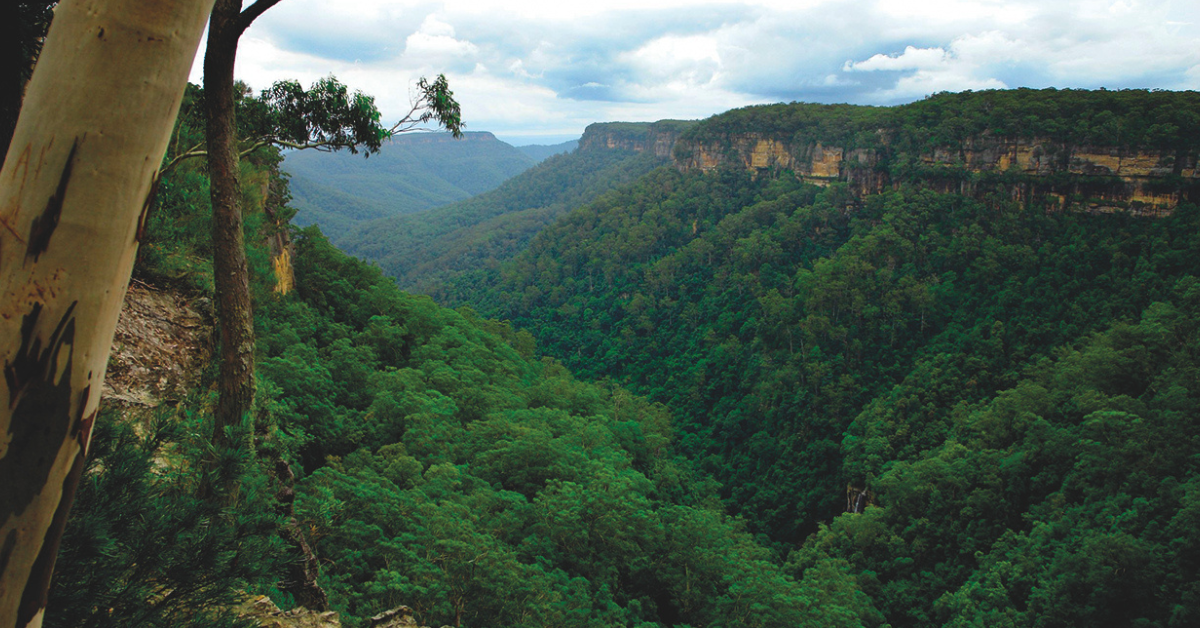
Heart Spring water surfaces naturally through many layers of rock before emerging from a fault in the basalt. We simply harvest a fraction of the water directly into a series of enclosed stainless-steel tanks. Rising to the surface by geo-pressure, true springs develop over millions of years and typically travel thousands of kilometres. We believe the Heart Spring water pre-dates human existence and consider it to be ‘dinosaur’ water – certainly untouched by any modern-day influences or chemicals. Thought to have come from the New Zealand Alps under the Tasman Sea, the flow is continuous and unaffected by local conditions. Moving like an underground glacier through the porous sandstone, this ancient system then rises 600 metres – filtering through the earth’s layers to surface and flow into a peaceful green gully, protected by a small pocket of rainforest in the fertile Southern Highlands village of Burrawang.
Our tanks in the rainforest gully are connected directly into the spring source, so the water is not exposed to the environment, animals or light. Spring water keeps fresh by moving through its cool and dark home beneath the surface. Think about these conditions when you decide where to keep your water and bottles at home.
We harvest just a tiny fraction of the water, allowing most of it to flow into a creek – its natural run-off course. We are very proud to care-take this headwater of the creek in its pristine environment, which is also home to the critically endangered Fitzroy Spiney Crayfish. Found nowhere else in the world – a scientific study is underway to support them.
Mother Nature Knows Best
These days, I admit to being somewhat of a ‘water snob’ and count my blessings daily for finding Heart Spring water!
I understand the ‘convenience’ and ‘economic’ imperatives that drive purchasing decisions, but when people ask me about alternatives to natural spring water, I think the most important fact to keep in mind is that we humans are up to 90% water! Don’t we deserve to hydrate our cells with the best quality water we can find? I’m sorry, but no tinkering with mother nature can match her brilliance and none of my research or testing of filters, structuring devices, additives or other interventions have come close to Heart Spring water – IMO. When customers move away, I ask them to let me know what water is ‘out there’ in their travels or new location, but they only say they wish they could find some decent water! In fact, many of our customers travel long distances to the Highlands just to fill up.
Most people don’t know that in Australia, bore water and even tap water can be sold legally as ‘spring water’. This isn’t fair to the genuine spring water businesses like us who pay a lot more to harvest spring water from a natural bush environment. Bore drawn and tap waters that endure further denaturing treatments and travel 1000’s of food miles are sadly a long way from “as nature intended”. In contrast, our turnaround from spring to bottle protects the microbiome of the water as we get it to you directly from a local spring, store it briefly in stainless steel and only fill your bottles (which are BPA Free) when you come by on our ‘Fill Em Up’ days – no contest in our book!

Expert Opinion
Some 20 years ago while on a lecture tour of Australia the Japanese water scientist Dr Masaru Emoto literally sampled water from ‘our’ spring and he declared it to be the best water available in Australia! It was naturally enormously encouraging to hear about this from the original bottler of the water who had gone to great lengths to get the water to Dr Emoto during his tour as one of the world’s leading authorities on the emerging science of water.
Bursting the Bubble – Spring Water’s Poor Cousins
Like margarine vs butter in the 70’s, alkaline water is another marketing winner that we now know is not actually good for you. Despite the claims that alkaline water reduces inflammation, nutritionists and many scientific articles concur that our drinking water should be close to pH neutral or even slightly acidic. When you drink water, the first place it goes to is your stomach which is acidic for good reason – to digest protein. If you dilute your stomach acid, you may experience heartburn and unpleasant digestive issues.
Keeping inflammation low relies more successfully on a low-acid diet, positive mental health strategies, regular exercise and good, whole food nutrition.
Filters throw the baby out with the bath water. Whilst removing any bad things, they also take away the nutritional benefits and microorganisms present in water. You cannot unscramble an egg! Filtered water is denatured and must be reconstituted internally before it can do the important job of hydrating your body at a cellular level.
Structuring devices mimic the movement of water in nature to energise it. If you can get water from nature without it being harmed, it is better than having to understand or trust what is being done to water to make it healthy.
Hydrogen devices make sense but by maintaining a healthy lifestyle you can support your body’s natural hydrogen balance, primarily through gut health.
Adding Celtic Sea salt or minerals seems nutritionally sound as our soils are now so depleted of minerals. If you start with good quality spring water, as nature intended, a pinch of added salt will help hydrate your body at a cellular level – research ‘4th phase of water’ for more about this.
Rainwater is simple water with no minerals or microbes. It should at least be clean if the tanks are regularly cleaned and the water is circulated, but on the downside, consider dust, bird, and possum droppings, etc.; and possible industrial/agricultural contaminants from the air. For these reasons, rainwater is usually filtered. Geo-engineering testing has shown increased levels of barium, strontium and aluminium in rainwater. I had Heart Spring water tested by ALS Global. As the spring is not exposed to surface conditions, it was no surprise that nothing of that kind registered on their equipment.
Nothing is perfect in life but it seems we are very fortunate to have this water!
NOTES
Be sure to store your bottles in a cool dark place to avoid any
plastic interaction with the water.
Our ‘Fill ‘Em Up’ days are Thursday
1pm to 6pm and Saturday 9am to 2pm.
I refrained from including several
references and citations in this article for the sake of brevity, but I’m
always up for a conversation about anything water related.
We hope to see you soon!
Chris Cloran
Very interesting to read your story.
Thank you very much for your effort to supply us with the best water we can get .
Joseph, we feel the same and your appreciation is great to receive, making it all worthwhile!
Hey Chris, great reading your water story & I’m very thankful to you for providing us such pure water to enjoy. We give it to our cats, dogs & indoor plants as well.
Thanks so much & see you again soon.
Regards Robyn, Alex & Shelly.
Thanks for taking the time to read my story and I share your feelings of gratitude!